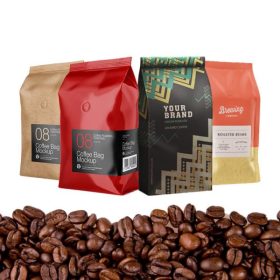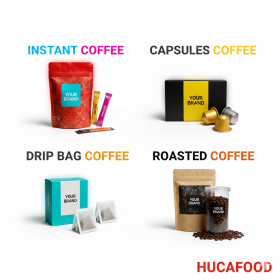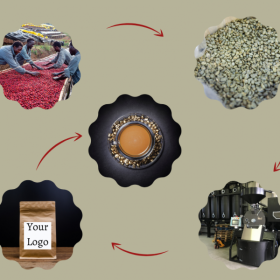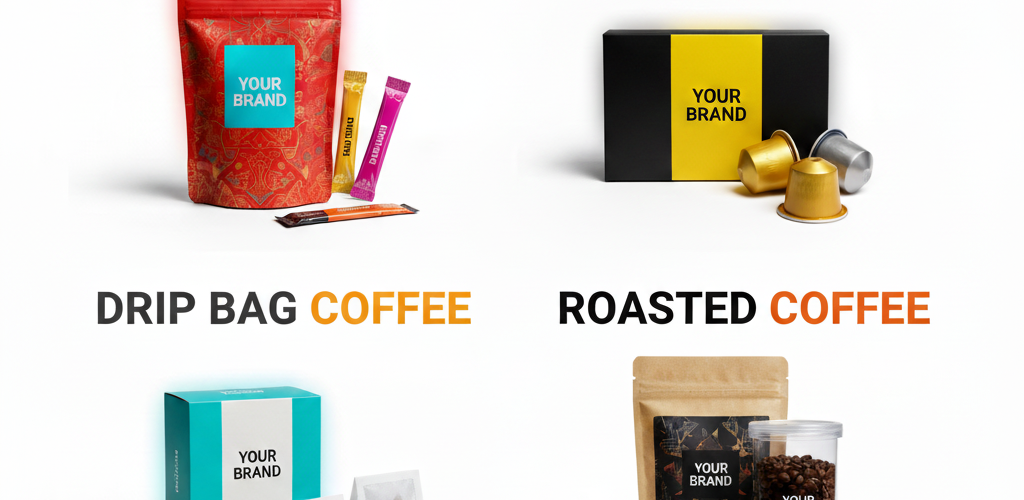
Coffee manufacturing in Vietnam enables importers, distributors, retailers and new coffee brands to develop products under their own labels without investing in a complete production facility.
Depending on the project, a Vietnamese coffee manufacturer may support raw-material selection, product formulation, sample development, roasting, instant-coffee production, packaging, labeling and export preparation.
This guide explains how OEM and private label coffee manufacturing works in Vietnam, which products can be developed, what affects the price and how to evaluate a potential manufacturing partner.
What is coffee manufacturing?
Coffee manufacturing is the process of converting green coffee beans and other approved ingredients into finished products that are ready for retail, food-service distribution or further industrial use.
Depending on the product, manufacturing may include:
- Green coffee cleaning and grading.
- Roasting and grinding.
- Instant-coffee extraction and drying.
- Formula development and ingredient blending.
- Filling and packaging.
- Labeling and secondary packaging.
- Quality inspection and finished-product release.
The exact production process depends on whether the customer needs roasted beans, ground coffee, instant coffee, premixed coffee or another coffee-based product.

What do OEM, ODM and private label coffee mean?
These terms are often used together, but they describe slightly different working models.
| Manufacturing model | How it normally works | Suitable for |
|---|---|---|
| OEM coffee manufacturing | The customer provides a formula, technical specification or detailed product requirements. The factory manufactures the product according to the approved specification. | Businesses that already have a developed product or clear formula. |
| ODM coffee manufacturing | The manufacturer participates in product development, formula creation, sampling and packaging recommendations. | Businesses that have a product idea but need technical development support. |
| Private label coffee | An existing or customized coffee product is sold under the customer’s brand name and packaging. | Retailers, distributors, e-commerce sellers and emerging brands. |
| Contract manufacturing | The factory performs agreed production services for another company under a manufacturing contract. | Companies outsourcing part or all of their coffee production. |
A single project may combine these models. For example, a customer may start with an ODM formula, approve a customized sample and then order the finished product under a private label.
Why consider coffee manufacturing in Vietnam?
Access to a major coffee-producing origin
Vietnam has a large coffee-growing and processing industry, with a supply base that is particularly strong in Robusta coffee.
Manufacturing close to coffee-growing regions can help simplify raw-material sourcing and give producers access to different grades, origins and processing methods. Availability, quality and price can still change between harvests, so they should be confirmed for each contract.
Experience with Robusta-based products
Vietnamese manufacturers commonly work with Robusta for products that require strong body, pronounced coffee flavor and competitive formulation costs.
Depending on the target market, Robusta can also be blended with Arabica to balance aroma, acidity, body and aftertaste.
Multiple coffee-processing capabilities
Manufacturing capabilities differ between factories, but services available in Vietnam may include:
- Green coffee processing.
- Custom coffee roasting.
- Roasted bean and ground coffee production.
- Instant black coffee manufacturing.
- 2-in-1, 3-in-1 and 4-in-1 coffee blending.
- Freeze-dried and spray-dried coffee products.
- Drip-bag coffee packing.
- Coffee capsule filling.
- Retail and food-service packaging.
Flexible product development
Some manufacturers can adjust roast level, coffee blend, sweetness, creaminess, aroma, serving size and packaging format. The actual options depend on the factory’s equipment, ingredient system and minimum production requirements.
Potential production-cost advantages
Vietnam may offer competitive manufacturing conditions because of its coffee supply chain, processing experience and proximity to growing regions.
However, buyers should not compare factories based only on a headline unit price. The true landed cost also includes formulation, samples, packaging, printing, testing, freight, import duties and inventory requirements.
Which coffee products can be manufactured in Vietnam?
Roasted coffee beans
Customers can request whole roasted beans based on origin, bean grade, blend ratio, roast profile and intended brewing method.
Typical projects include:
- Espresso blends.
- Robusta and Arabica blends.
- Single-origin products.
- Dark-roast traditional coffee.
- Medium-roast retail coffee.
- Whole beans for cafés, hotels and restaurants.
Ground coffee
Roasted coffee can be ground to suit different brewing methods. The buyer should specify the intended preparation method because grind size affects extraction and customer experience.
Possible formats include:
- Ground coffee for Vietnamese phin filters.
- Espresso-ground coffee.
- Filter coffee.
- Pour-over coffee.
- French press coffee.
- Food-service packs.
Black instant coffee
Black instant coffee normally contains soluble coffee without added sugar or creamer. It may be made using spray-dried, agglomerated or freeze-dried coffee, depending on the project.
Customers may request adjustments to:
- Coffee strength.
- Aroma profile.
- Bitterness.
- Acidity.
- Solubility.
- Particle size.
- Serving weight.
2-in-1 instant coffee
A 2-in-1 product commonly combines instant coffee with either sugar or a creamer system. The exact definition should be clearly stated because formulations vary between markets.
3-in-1 instant coffee
Three-in-one instant coffee commonly contains soluble coffee, sugar and a creamer system. The formula can be adjusted for sweetness, coffee intensity, creaminess and target price.
4-in-1 coffee products
A 4-in-1 formula generally adds another ingredient to a 3-in-1 base. The additional ingredient may be selected according to the product concept and applicable regulations.
Any benefit statement or ingredient claim must match the actual formula, supporting documents and labeling rules in the destination market.
Cappuccino, latte and mocha premixes
These products may combine coffee, sugar, creamer, milk ingredients, cocoa or flavor components. Foam performance, sweetness and aroma are important development criteria.
Freeze-dried coffee
Freeze-dried coffee is produced by freezing concentrated coffee extract and removing frozen water through sublimation under vacuum.
This process is commonly selected for premium instant-coffee products that require a larger, porous granule structure and strong aroma positioning.
Drip-bag coffee
Ground coffee is filled into a disposable filter bag that can be placed over a cup. Drip bags are suitable for travel, offices, hotels, gifts and e-commerce sales.
Coffee capsules
Capsule manufacturing requires compatibility between the coffee dose, grind size, capsule structure and target brewing system. Customers should confirm machine compatibility before commercial production.

How does the coffee manufacturing process work?
1. Define the product concept
The buyer should first define what the product is intended to achieve.
A useful product brief includes:
- Product category.
- Target customer.
- Destination country.
- Retail or wholesale channel.
- Desired flavor.
- Target retail price.
- Expected order volume.
- Preferred packaging format.
- Desired launch date.
2. Select the coffee and ingredients
The manufacturer and customer discuss the coffee base, bean origin, roast profile and any ingredients required for the formula.
For instant premixes, this may include:
- Instant coffee.
- Sugar.
- Creamer or milk ingredients.
- Cocoa.
- Flavor components.
- Permitted functional ingredients.
The ingredients must be suitable for the product specification and destination market.
3. Develop the formula
The research and development team prepares an initial formula based on the buyer’s brief.
The development process may evaluate:
- Coffee intensity.
- Aroma.
- Sweetness.
- Creaminess.
- Color after preparation.
- Solubility.
- Foam performance.
- Aftertaste.
- Estimated production cost.
4. Produce and evaluate samples
Samples allow the customer to test the product before committing to commercial production.
Feedback should be specific. Instead of saying that a sample is simply “not strong enough,” the buyer should indicate whether the problem relates to aroma, bitterness, body, coffee dosage or sweetness.
5. Confirm the final specification
Before production, both parties should confirm the approved formula and technical requirements.
The confirmed specification may include:
- Ingredient list.
- Formula ratio.
- Serving weight.
- Preparation instructions.
- Sensory standard.
- Packaging material.
- Label information.
- Finished-product testing requirements.
6. Develop the packaging
The packaging must protect the coffee while communicating the brand and mandatory product information.
Depending on the project, packaging may include:
- Printed sachets.
- Stick packs.
- Valve bags.
- Stand-up pouches.
- Glass or plastic jars.
- Paper boxes.
- Drip-bag envelopes.
- Shipping cartons.

7. Confirm the commercial order
The purchase agreement should identify the quantity, price, payment conditions, production timing, approved artwork, packaging specifications and delivery terms.
Buyers should also confirm how changes, defective products, delays and confidential information will be handled.
8. Prepare materials and schedule production
The manufacturer prepares coffee, ingredients, printed packaging and production resources after the order is confirmed.
Lead time may be affected by custom-printed packaging, imported ingredients, testing requirements and factory scheduling.
9. Manufacture the product
The production steps depend on the coffee format.
For roasted coffee, the process may include:
- Green bean inspection.
- Roasting.
- Cooling.
- Grinding where required.
- Filling.
- Sealing.
For an instant-coffee premix, the process may include:
- Ingredient preparation.
- Weighing.
- Blending.
- In-process inspection.
- Sachet or jar filling.
- Sealing.
- Boxing and cartoning.
10. Inspect and release the finished product
Finished products may be evaluated for:
- Appearance.
- Aroma and flavor.
- Solubility.
- Moisture.
- Net weight.
- Seal integrity.
- Packaging accuracy.
- Relevant chemical and microbiological criteria.
11. Pack and deliver the order
Products are packed into shipping cartons according to the agreed carton configuration. Delivery may be arranged to a domestic warehouse, freight forwarder or export port, depending on the contract.
Video introduction to coffee OEM/ODM manufacturing
The following video provides an overview of HUCAFOOD and its coffee manufacturing activities.
What can be customized in a private label coffee project?
| Area | Possible customization |
|---|---|
| Coffee base | Robusta, Arabica, blend, roast profile or instant-coffee type. |
| Flavor profile | Aroma, body, acidity, bitterness, sweetness and aftertaste. |
| Formula | Black coffee, 2-in-1, 3-in-1, 4-in-1, cappuccino or another approved concept. |
| Serving size | Single-serve sachet, stick, jar or food-service format. |
| Packaging | Material, dimensions, print design, box structure and carton configuration. |
| Branding | Brand name, logo, design system and product positioning. |
| Language | Label language selected for the destination market. |
| Testing | Testing scope based on product category, buyer requirements and applicable regulations. |
What affects coffee manufacturing costs?
There is no single manufacturing price that applies to all coffee products. A reliable quotation requires a clear product brief.
Coffee and ingredient selection
Cost varies according to coffee origin, grade, blend, instant-coffee technology and additional ingredients.
Formula complexity
A basic black instant coffee generally has a different cost structure from a formula containing multiple ingredients, special flavors or additional technical requirements.
Packaging type
Stock packaging is usually different in cost and minimum quantity from custom-printed sachets, jars, boxes or capsules.
Order quantity
Order size affects material purchasing, packaging setup, machine setup and production planning. Larger orders may reduce some per-unit setup costs, but the actual price must be calculated for each specification.
Testing and documentation
Additional laboratory tests, market-specific documents, translations and product registrations may add cost and time.
Freight and delivery terms
A factory price does not necessarily include inland transport, export handling, ocean freight, insurance, customs clearance or import duties.
What is the minimum order quantity?
Minimum order quantity, commonly called MOQ, depends on the product and packaging configuration.
MOQ can be affected by:
- Formula type.
- Production-line setup.
- Serving size.
- Printed-film minimums.
- Box-printing minimums.
- Jar or capsule supplier requirements.
- Testing and documentation requirements.
A manufacturer may support a smaller trial project by using available packaging, but a fully customized printed package may require a higher quantity.
Buyers should request separate information for:
- Sample quantity.
- Pilot or trial order.
- Commercial MOQ.
- Printed packaging MOQ.
- Repeat-order MOQ.
How long does coffee manufacturing take?
Production timing varies by project. A product using an existing formula and stock packaging may be completed faster than a newly developed formula with custom-printed materials.
The total timeline may include:
- Brief review.
- Formula development.
- Sample production.
- Sample shipping.
- Customer evaluation.
- Formula adjustment.
- Artwork development.
- Packaging production.
- Material preparation.
- Commercial manufacturing.
- Testing and product release.
Customers should request a written schedule after the formula, packaging and order quantity have been confirmed.
Quality control in coffee manufacturing
Quality control should cover the raw materials, production process, packaging and finished product.
Raw-material control
- Supplier and origin information.
- Green coffee quality.
- Ingredient specifications.
- Packaging-material specifications.
- Storage conditions.
In-process control
- Roast or blending parameters.
- Ingredient weighing.
- Product appearance.
- Filling weight.
- Seal condition.
- Traceability information.
Finished-product control
- Sensory evaluation.
- Solubility where applicable.
- Net weight.
- Moisture or water activity where required.
- Microbiological and chemical criteria.
- Label and carton verification.
Testing requirements should be agreed before production because different products and markets may require different criteria.
Certificates and documents to request
Buyers should not rely only on certificate logos displayed on a website or sales presentation. They should request current copies and check whether each document applies to the factory and product involved in the order.
Documents may include:
- Business registration information.
- Food-safety management certificates.
- HACCP documentation.
- Halal certification where required.
- Product specification.
- Ingredient specification.
- Certificate of Analysis.
- Test reports.
- Country-of-origin documents.
- Export documents.
- Free Sale Certificate where applicable.
The required documents depend on the product, destination country and importer’s compliance process.
Is coffee manufacturing in Vietnam suitable for export?
Vietnamese coffee products are exported to many international markets. However, manufacturing a product in Vietnam does not automatically mean that it is approved for sale in every country.
Before production, the buyer should confirm:
- Ingredient restrictions in the destination country.
- Permitted food additives and flavors.
- Nutrition-label format.
- Allergen declarations.
- Required language.
- Product-name requirements.
- Claims and advertising restrictions.
- Importer registration requirements.
- Testing and documentation requirements.
The importer or brand owner normally remains responsible for confirming that the product and label comply with the laws of the destination market.
Who should consider OEM coffee manufacturing?
Startup coffee brands
A startup can develop and test a branded coffee product without building a complete production facility. The project still requires realistic budgeting for formulation, packaging, compliance and inventory.
Importers and distributors
Importers and distributors can use their existing market knowledge and sales channels to develop private label products for specific customer groups.
Retailers and supermarket chains
Retailers can create store-brand coffee lines with packaging, price positioning and specifications suited to their customers.
Coffee shop chains
A café chain can extend its brand into packaged beans, ground coffee, drip bags or instant products for in-store and online sales.
Hotels, restaurants and catering companies
Food-service businesses may need individually packed coffee, bulk packs, guest-room products or customized serving formats.
E-commerce sellers
E-commerce sellers can create products designed for direct-to-consumer sales, subscriptions, gift bundles or marketplace distribution.
FMCG companies
Established consumer-goods companies may use contract manufacturing to extend their portfolio without installing a new coffee-production line.
How to choose a coffee manufacturer in Vietnam
Confirm actual manufacturing capabilities
Determine which processes are performed by the factory and which are outsourced. A company selling instant coffee may not necessarily operate its own extraction or drying equipment.
Request relevant samples
Test samples that are technically similar to the planned commercial product. A roasted-bean sample does not demonstrate a factory’s ability to manufacture a complex instant premix.
Evaluate communication quality
A suitable partner should ask detailed questions about the formula, customer, market, price and packaging instead of sending only a generic quotation.
Review the product specification
The approved specification should describe the product clearly enough for both parties to understand what will be manufactured.
Inspect packaging capabilities
Confirm available filling sizes, packaging materials, printing options, coding equipment and seal-quality controls.
Check documents and certificate scope
Review current certificates, the legal company name, facility address, expiry date and certified activities.
Discuss confidentiality
If the customer provides a proprietary formula, artwork or market strategy, confidentiality and ownership should be addressed in writing.
Clarify complaint and replacement procedures
The contract should explain how quality complaints, shortages, packaging defects and non-conforming products will be investigated.
Questions to ask a Vietnamese coffee manufacturer
- Which coffee products do you manufacture directly?
- Can you develop a new formula or only use existing formulas?
- What is the MOQ for the product and for custom packaging?
- How many sample revisions are included?
- Which tests are included in the quotation?
- Which certificates apply to the production site?
- Can you provide a product specification and Certificate of Analysis?
- What packaging formats are available?
- Who owns the final formula and artwork?
- What is the estimated lead time after approval?
- Which delivery terms are available?
- How are quality complaints handled?
Common mistakes when outsourcing coffee production
Choosing only by the lowest price
A low quotation may exclude packaging, testing, formula development, freight or required documentation.
Starting without a clear product brief
An unclear brief causes repeated sample revisions, delays and inconsistent quotations.
Skipping sample approval
Commercial production should not begin until the customer has evaluated and approved a representative sample.
Approving artwork before confirming the formula
The ingredient list, nutrition information, product name and preparation instructions may change during formulation.
Ignoring packaging MOQ
The minimum print quantity for sachet film or boxes may be higher than the factory’s production MOQ.
Making unsupported product claims
Health, nutrition, organic, natural, low-sugar and similar claims must be supported by the formula, evidence and applicable regulations.
Not defining acceptance criteria
Terms such as “premium,” “strong” or “smooth” are subjective. The parties should define measurable and sensory acceptance criteria.
About HUCAFOOD coffee manufacturing services
HUCAFOOD provides OEM and ODM support for coffee products, including roasted coffee, ground coffee, instant coffee and private label formats.
Depending on the project, customers can discuss:
- Product concepts.
- Coffee blends and roast profiles.
- Instant-coffee formulas.
- Sample development.
- Serving sizes.
- Retail and food-service packaging.
- Private label branding.
- Domestic and export-oriented projects.
HUCAFOOD currently publishes information relating to ISO 22000, HACCP, Halal and FDA on its official websites. Customers should request current documents and confirm their scope before using certificate names or logos on a product.
Frequently asked questions
Can I create my own coffee brand in Vietnam?
Yes. An OEM, ODM or private label manufacturer can produce coffee under the customer’s brand, subject to the approved formula, packaging, order quantity and contract.
Do I need my own coffee formula?
Not necessarily. A manufacturer with product-development capability may help create a formula based on the target market, flavor and price requirements.
Can I send a reference product?
Yes. A reference sample can help communicate the desired flavor, aroma, sweetness and product format. The manufacturer may not be able to reproduce it exactly because ingredients and processes differ.
Can the coffee be customized?
Customization may include coffee blend, roast profile, formula, sweetness, creaminess, flavor, serving size and packaging. Available options depend on the manufacturer’s capabilities.
What is the MOQ for private label coffee?
MOQ varies according to product type, packaging, printing and production setup. Buyers should request separate MOQ information for the coffee and custom-printed packaging.
How many samples should be tested?
The number depends on the project. A new formula may require several rounds, while an existing product with minor adjustments may require fewer.
How long does manufacturing take?
The timeline depends on formula development, sample approval, packaging production, material availability, order size and factory scheduling.
Can Vietnamese manufacturers produce coffee for export?
Yes, export-oriented production is possible. The buyer must still confirm product, label and documentation requirements for the destination country.
Can a factory help with packaging design?
Some manufacturers can support packaging structure or design coordination. The scope, fees and ownership of design files should be confirmed before work begins.
Is a larger order always cheaper?
A larger order may reduce certain setup and packaging costs per unit, but the final price also depends on ingredients, packaging materials, testing and delivery terms.
Request a coffee manufacturing quotation
To receive a more accurate OEM or private label coffee quotation, prepare the following information:
- Product type.
- Target market.
- Target customer.
- Preferred coffee flavor.
- Formula or reference product, if available.
- Serving weight.
- Packaging format.
- Expected order quantity.
- Target cost or retail price.
- Required certificates and tests.
- Desired delivery date.
- Destination country or delivery location.
A detailed product brief allows the manufacturer to recommend a more suitable formula, packaging option, MOQ and production plan.
Important: Manufacturing capabilities, certifications, MOQ, lead times and export documentation vary by product and order. Buyers should verify current information and obtain written confirmation before placing a commercial order.