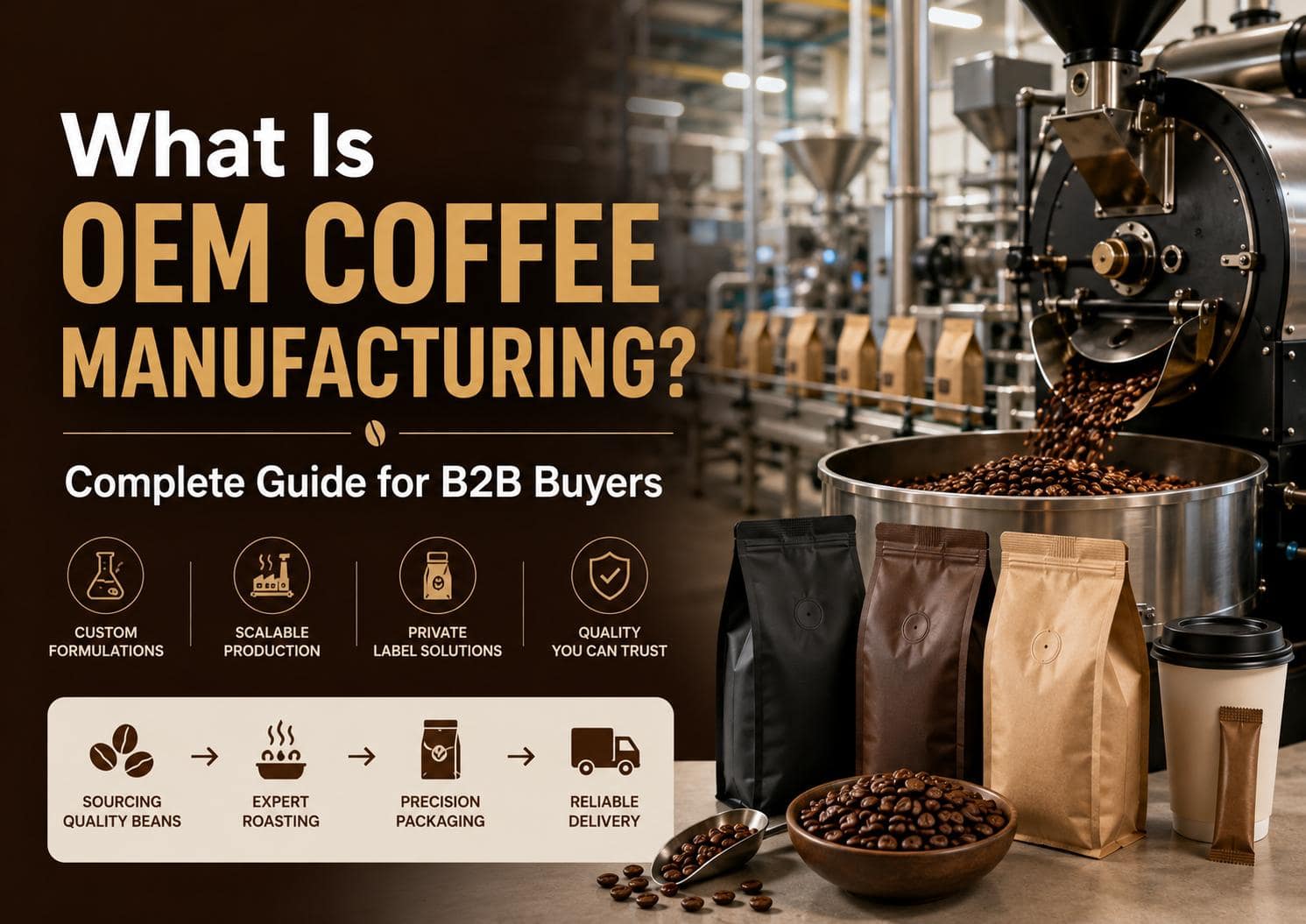
OEM coffee manufacturing is a production service where a coffee factory manufactures products according to a buyer’s requirements and sells them under the buyer’s brand. This model is commonly used by private label brands, importers, distributors, retailers, e-commerce sellers and foodservice companies that want to launch coffee products without owning a factory.
For B2B buyers, working with an OEM coffee manufacturer can reduce production risk, shorten product development time and make it easier to build a customized coffee product line. Depending on the factory’s capability, OEM coffee production may include roasted coffee beans, ground coffee, instant black coffee, 3 in 1 instant coffee, 4 in 1 instant coffee, sachet coffee, stick packs and bulk coffee products.
What does OEM coffee manufacturing mean?
OEM stands for Original Equipment Manufacturer. In the coffee industry, it means the factory produces coffee based on the buyer’s specifications. The buyer usually owns the brand, sales channel and market strategy, while the factory handles production.
A coffee OEM manufacturer may follow an existing formula provided by the buyer, or help adjust the product based on target taste, packaging format and market positioning. The final product is usually packed under the buyer’s brand name.
For example, a distributor may want to launch a private label instant coffee product for supermarkets. Instead of building a production line, the distributor can work with an OEM coffee factory to develop the formula, produce the coffee and pack it into finished retail units.
OEM coffee manufacturing vs contract coffee manufacturing
OEM coffee manufacturing and contract coffee manufacturing are closely related. Both describe a model where a third-party factory produces coffee for another company. However, OEM is often used when the product is manufactured under the buyer’s brand with specific requirements.
Contract coffee manufacturing is a broader term. It may include private label production, bulk production, custom roasting, instant coffee production, packaging services or long-term supply agreements.
In practice, many B2B buyers use both terms when searching for a manufacturing partner. The most important point is to confirm whether the factory can support your required product type, quality standard, packaging format, MOQ and export needs.
Common OEM coffee products
A reliable coffee OEM manufacturer can usually support different product categories depending on its production lines.
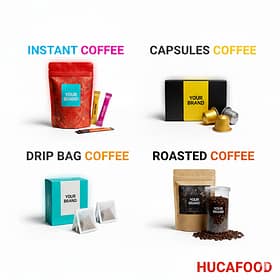
Roasted coffee beans are suitable for coffee shops, retail brands, specialty coffee lines and foodservice channels. Ground coffee is often used for supermarkets, convenience stores, e-commerce and traditional brewing markets. Instant coffee is suitable for fast-moving retail products, office consumption, travel packs and export markets.
Instant coffee products may include black instant coffee, 3 in 1 instant coffee, 4 in 1 instant coffee and customized formulas. These products are popular because they are convenient, easy to distribute and suitable for many consumer segments.
The right product type depends on your target market, selling price, taste preference, packaging plan and distribution channel.
How the OEM coffee manufacturing process works
A typical OEM coffee production process includes several steps.
1. Product requirement discussion
The buyer shares the product idea, target market, expected price range, taste profile, packaging format and estimated order quantity. At this stage, the manufacturer should understand whether the buyer needs roasted coffee, ground coffee, instant coffee or a complete private label coffee solution.
2. Formula and material selection
The factory recommends suitable materials and product direction. For roasted coffee, this may include Robusta, Arabica or custom blends. For instant coffee, it may include coffee extract, sugar, creamer, milk powder, flavoring or other ingredients depending on the formula.
The goal is to create a product that matches the target market while remaining stable for mass production.
3. Sample development
Before mass production, the manufacturer prepares samples for the buyer to test. The buyer reviews taste, aroma, color, mouthfeel, solubility, sweetness, bitterness and overall product experience.
Sample development is an important step because it helps avoid mistakes before placing a larger order.
4. Packaging preparation
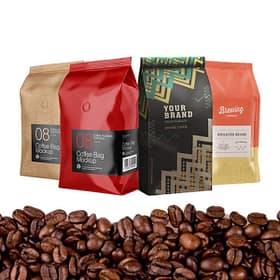
Packaging plays a major role in private label coffee. Depending on the sales channel, the product may be packed in sachets, stick packs, zipper bags, boxes, cans or bulk bags.
Good packaging should protect product quality, present the brand clearly and provide necessary product information for the market.
5. Mass production
After the sample and packaging are approved, the factory starts production. A professional OEM coffee factory should control material quality, formula accuracy, roasting profile, grinding size, mixing ratio, filling weight and sealing quality.
6. Quality control and delivery
Before shipment, the finished products should be checked to ensure they meet the agreed specifications. The manufacturer may inspect appearance, packaging, weight, taste, batch information and carton condition before delivery.
Why choose Vietnam for coffee manufacturing?
Vietnam is one of the world’s important coffee-producing countries, especially known for Robusta coffee. For international buyers, coffee manufacturing in Vietnam can be attractive because of raw material availability, experience in coffee processing and the ability to produce both traditional and modern coffee products.
Vietnamese coffee OEM factories can support a wide range of products, from roasted coffee beans to instant coffee. This makes Vietnam a practical sourcing destination for buyers who want to develop private label coffee products for retail, wholesale or export markets.
How to choose a reliable OEM coffee manufacturer
Choosing the right coffee OEM manufacturer is not only about price. B2B buyers should evaluate the factory’s production capability, sample development process, product categories, packaging options, quality control system and communication efficiency.
A good manufacturer should be able to explain the process clearly, provide realistic suggestions and help buyers avoid unsuitable product decisions. It is also important to check MOQ, lead time, export support, documentation and the ability to maintain consistent quality across repeat orders.
For private label coffee brands, long-term consistency is more important than short-term low cost. A product that tastes different from batch to batch can damage customer trust and make brand growth difficult.
Key questions to ask before placing an order
Before choosing a coffee OEM factory, buyers should ask several important questions.
Can the factory produce the exact product type you need? Can it support custom formula development? What is the MOQ for each packaging format? How long does sample development take? What packaging options are available? Can the factory support export documents if needed? How does the factory control product quality during production?
Clear answers to these questions can help buyers reduce risk and choose a better manufacturing partner.
FAQ
What is an OEM coffee manufacturer?
An OEM coffee manufacturer is a factory that produces coffee products according to a buyer’s requirements and packs them under the buyer’s brand.
Can I create my own private label coffee product?
Yes. A coffee OEM factory can help produce private label coffee based on your target market, formula, packaging design and order quantity.
What products can be made through OEM coffee manufacturing?
Common products include roasted coffee beans, ground coffee, black instant coffee, 3 in 1 instant coffee, 4 in 1 instant coffee, sachet coffee and stick pack coffee.
Is Vietnam a good place for coffee OEM production?
Yes. Vietnam has strong coffee raw material advantages and manufacturing experience, especially in Robusta coffee, roasted coffee and instant coffee products.
Conclusion
OEM coffee manufacturing is a practical solution for B2B buyers who want to launch coffee products under their own brand without investing in a factory. By working with a capable coffee OEM manufacturer, buyers can develop customized products, control production quality and enter the market faster.
To start successfully, buyers should prepare a clear product brief, including product type, target market, taste profile, packaging format, expected quantity and required documents. The clearer the brief, the easier it is for the manufacturer to create a product that matches the brand’s business goals.