


Contract Coffee Manufacturing: Step-by-Step Production Process for B2B Buyers
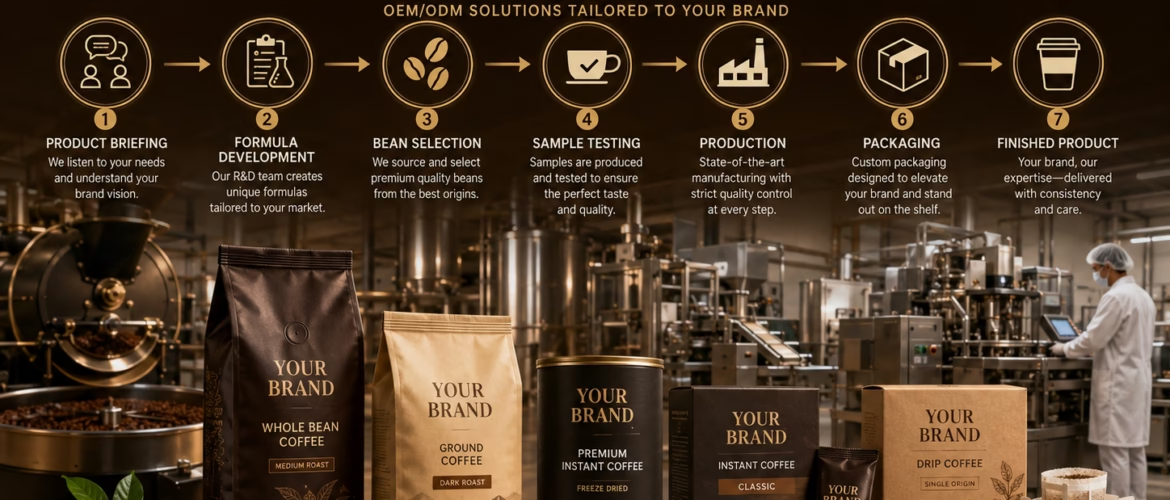
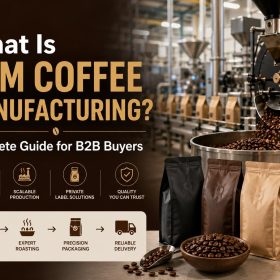
Contract coffee manufacturing is a service where a coffee factory produces coffee products for another business under agreed specifications. The process may include product briefing, raw material selection, formula development, sample testing, packaging, mass production, quality control and delivery.
For B2B buyers, this model is useful when they want to launch private label coffee without building a factory, hiring a full production team or investing in specialized coffee equipment.
A good contract coffee manufacturing project should not start with price alone. It should start with the target customer, product type, flavor direction, packaging format and sales channel.
What is contract coffee manufacturing?
Contract coffee manufacturing means outsourcing coffee production to a specialized manufacturer.
The buyer owns the brand and market strategy. The factory handles the production process according to the agreed scope.
Depending on the manufacturer, the service may include:
- Roasted coffee beans.
- Ground coffee.
- Instant black coffee.
- 3-in-1 instant coffee.
- 4-in-1 instant coffee.
- Sachet coffee.
- Stick pack coffee.
- Bulk coffee products.
- Private label coffee packaging.
The project can follow an OEM model if the buyer already has a formula and specifications. It can follow an ODM model if the manufacturer helps develop the product from a concept.
Who needs contract coffee manufacturing?
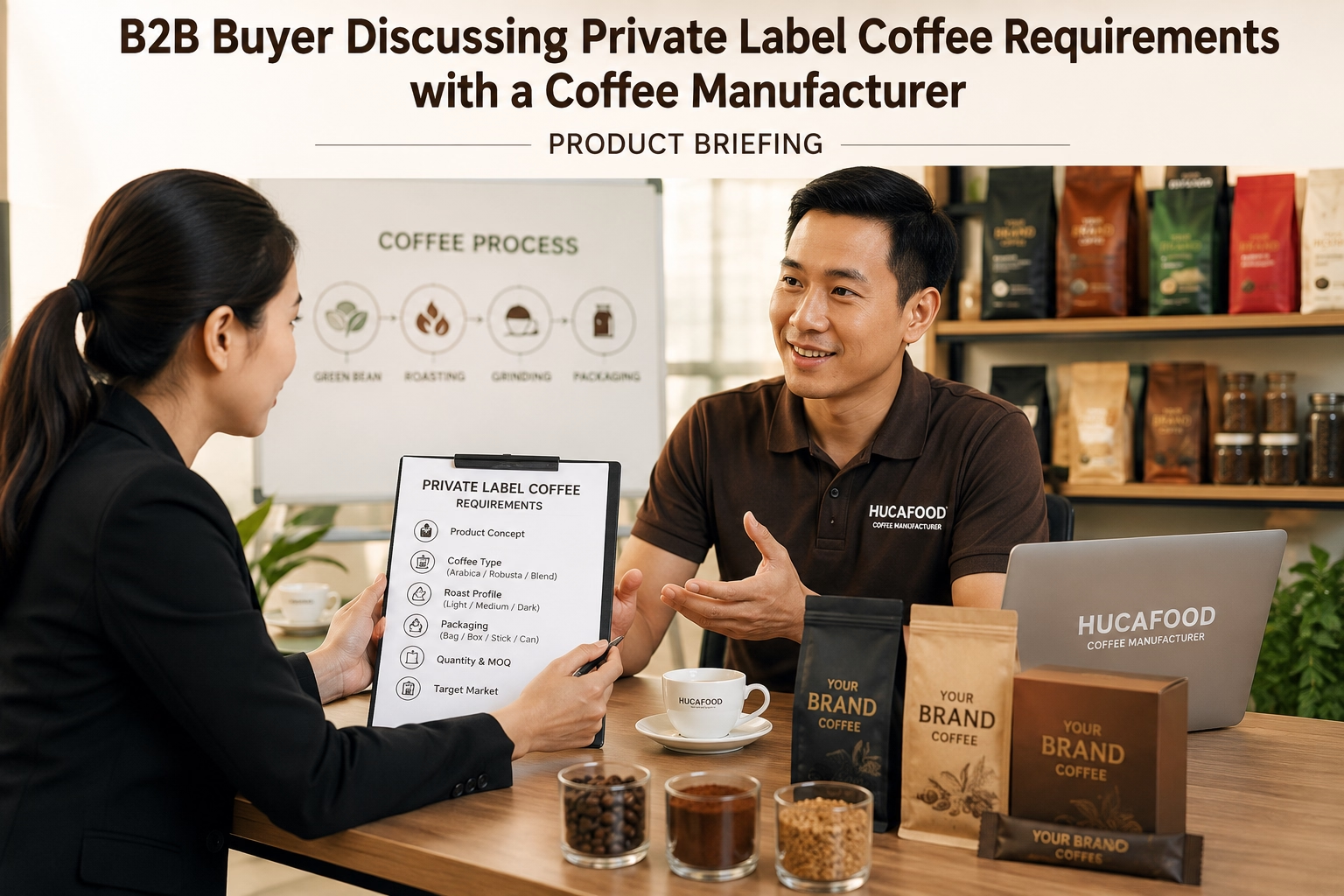
This service is suitable for businesses that want to sell coffee but do not want to operate their own factory at the beginning.
Typical buyers include:
- Importers.
- Distributors.
- Retail brands.
- E-commerce sellers.
- Coffee shop chains.
- Hotel and office suppliers.
- Foodservice companies.
- Startups building a private label coffee brand.
Contract manufacturing allows these buyers to focus on sales, brand positioning and distribution while using the factory’s production capability.
Contract coffee manufacturing process overview
| Stage | Main work | Expected result |
|---|---|---|
| 1. Product brief | Define product, market, price and channel | Clear product direction |
| 2. Material selection | Choose coffee beans or instant coffee ingredients | Suitable cost and flavor base |
| 3. Formula development | Adjust taste, strength, sweetness and format | Working product formula |
| 4. Sample testing | Produce and review trial samples | Approved reference sample |
| 5. Packaging preparation | Confirm materials, format and label content | Production-ready packaging |
| 6. Mass production | Roast, grind, blend, fill and pack | Finished goods |
| 7. Quality control | Check taste, weight, seal and batch information | Consistent product quality |
| 8. Delivery | Pack cartons and prepare shipment | Ready for distribution |
Step 1: Build a clear product brief
A clear product brief reduces delays and misunderstandings.
Before asking for a quotation, the buyer should define:
- Product category.
- Target country or region.
- Target customer.
- Flavor preference.
- Packaging format.
- Serving size.
- Expected retail price.
- Order quantity.
- Sales channel.
- Required documents if any.
For example, “instant coffee” is too broad. A stronger brief would be: “3-in-1 instant coffee for office workers, medium sweetness, strong coffee taste, 18 g sachet, packed in a box of 20 sticks.”
This level of detail allows the manufacturer to suggest a more realistic product plan.
Step 2: Select the coffee materials
Coffee material selection affects taste, cost and positioning.
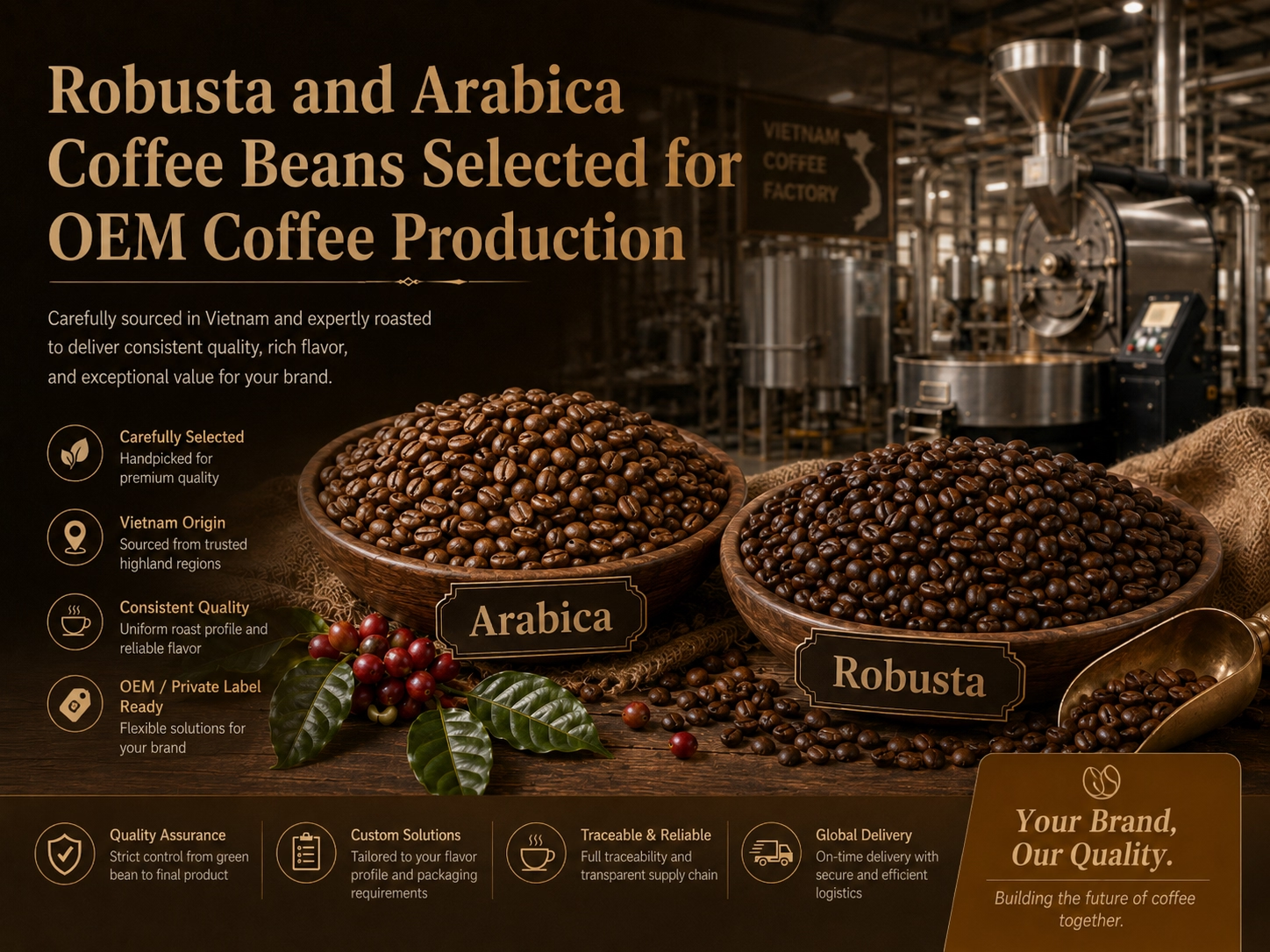
For roasted or ground coffee, the buyer may choose Robusta, Arabica or a custom blend. Robusta is often used for stronger, more intense coffee products. Arabica may be used for smoother flavor profiles or more premium positioning. A blend can balance aroma, body, bitterness and cost.
For instant coffee, the formula may include coffee powder or extract, sugar, creamer, milk powder, flavoring or other permitted ingredients depending on the product concept.
The manufacturer should explain how material choices influence flavor, price and production feasibility.
Step 3: Develop the formula
Formula development turns the product idea into something that can be manufactured consistently.
For roasted coffee, formula work may include roast level, blend ratio and grinding size. For instant coffee, it may include coffee strength, sweetness, creaminess, solubility and serving size.
Buyers should avoid vague requirements such as “make it premium” or “make it taste good.” It is better to describe the desired use case.
Examples:
- Strong Vietnamese-style coffee for iced coffee.
- Low-sugar 3-in-1 instant coffee for office use.
- Smooth roasted coffee blend for cafés.
- Black instant coffee for convenience retail.
- Ground coffee for traditional filter brewing.
Specific direction helps the manufacturer create samples that are closer to the target product.
Step 4: Review and adjust samples
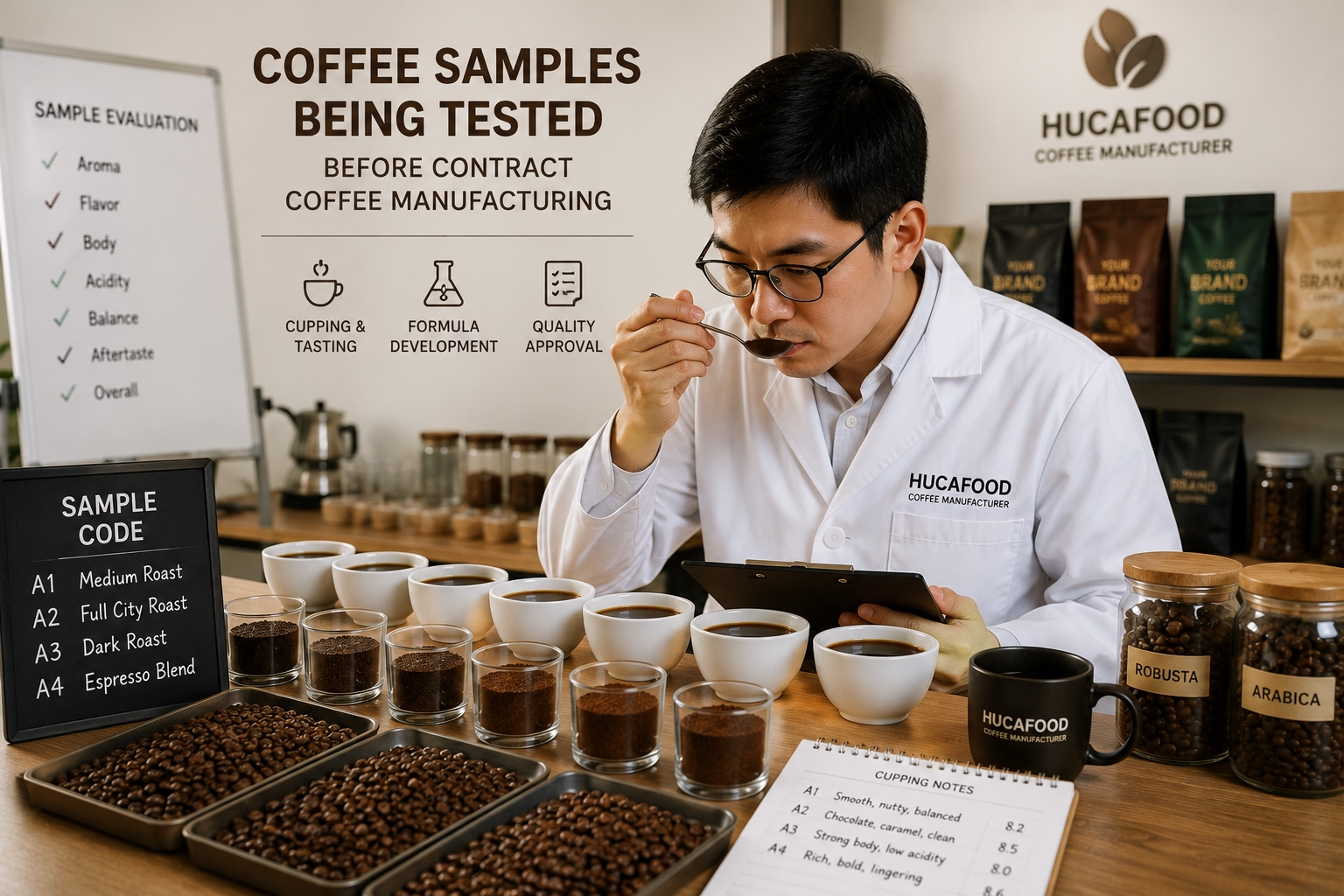
Sample development is one of the most important steps in contract coffee manufacturing.
Buyers should test samples in real consumption conditions. If the product is intended for iced coffee, test it with ice. If it is intended for office use, test it with the amount of water printed on the future packaging.
Evaluation criteria may include:
- Aroma.
- Coffee strength.
- Bitterness.
- Acidity.
- Sweetness.
- Creaminess.
- Mouthfeel.
- Solubility.
- Color.
- Aftertaste.
- Repeat drinking comfort.
It is helpful to collect feedback from several people who represent the target customer instead of relying on one person’s preference.
The approved sample should be kept as the reference for mass production.
Step 5: Choose packaging format
Packaging affects cost, shelf presentation, shipping and user experience.
Common formats include:
- 250 g or 500 g bags for retail coffee.
- 1 kg bags for cafés and foodservice.
- Stick packs for instant coffee.
- Sachets for single-serving products.
- Boxes for retail distribution.
- Jars or cans for mid-range and premium products.
- Bulk bags for B2B supply.
The selected packaging must be compatible with the manufacturer’s filling and sealing equipment.
A beautiful packaging concept that cannot run efficiently on the production line may create delays and higher costs.
Step 6: Prepare label and packaging content
Before printing, buyers should carefully review the packaging information.
Typical packaging content includes:
- Brand name.
- Product name.
- Ingredient list.
- Net weight.
- Serving instructions.
- Storage instructions.
- Manufacturing information.
- Expiry information.
- Batch code.
- Barcode if required.
- Importer or distributor information for the target market.
For export products, label requirements may differ by destination market. Buyers should confirm local requirements before printing large quantities.
Step 7: Confirm commercial terms
Before mass production, the buyer and manufacturer should confirm:
- Final formula.
- Approved sample.
- Packaging specification.
- Order quantity.
- Unit price.
- Sample fees.
- Packaging cost.
- Production lead time.
- Payment terms.
- Delivery terms.
- Responsibility for quality issues.
Clear commercial terms prevent confusion once production has started.
Step 8: Mass production
Mass production begins after the sample, packaging and commercial terms are approved.
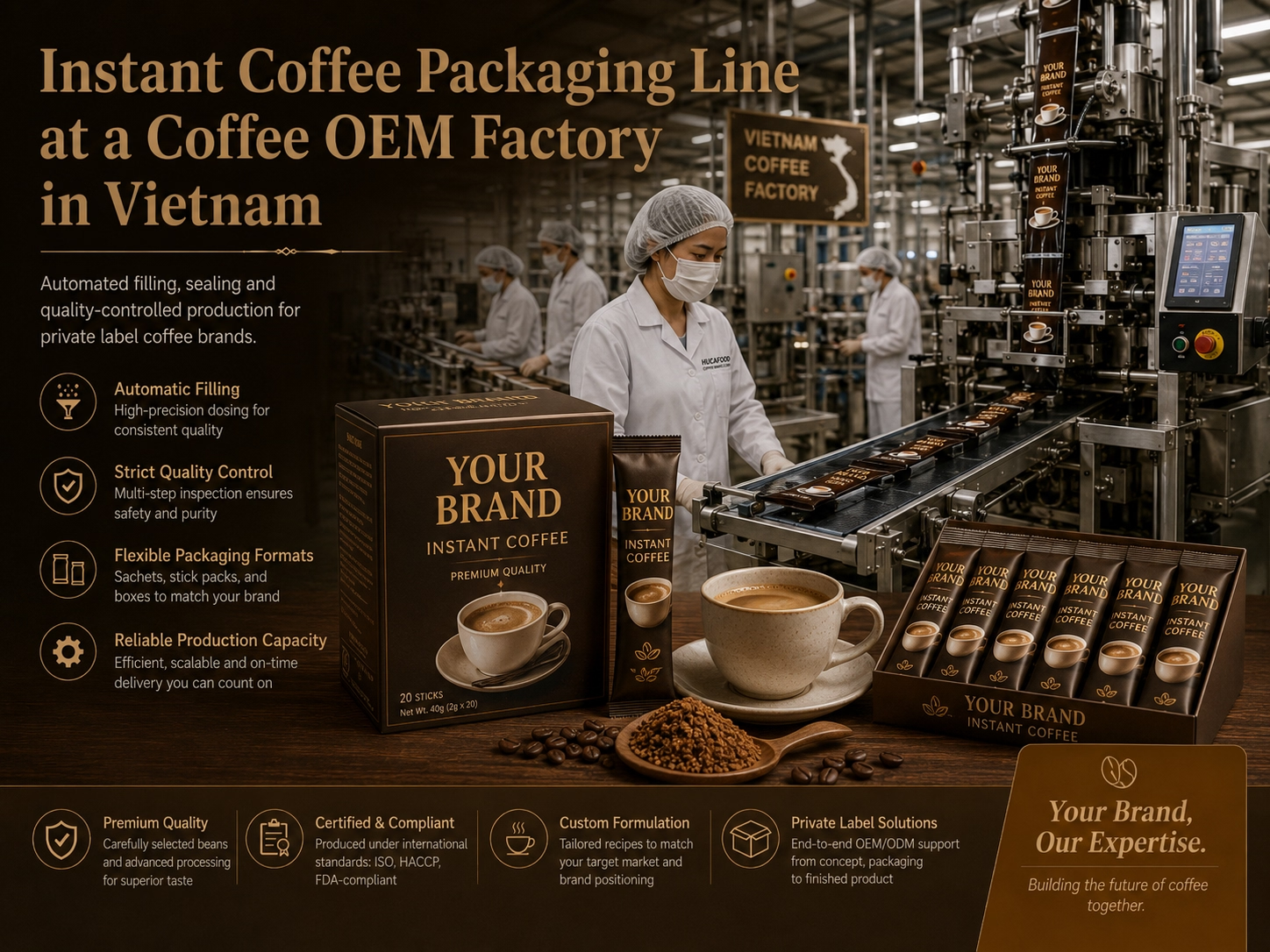
Depending on the product, production may involve roasting, grinding, extraction, drying, blending, filling, sealing, coding, boxing and carton packing.
The goal is not only to produce the correct quantity but also to maintain consistency. A private label coffee product must taste similar from one batch to the next if the buyer wants to build customer trust.
Step 9: Quality control
Quality control should be part of the process, not something done only at the end.
A coffee OEM factory may check:
- Raw materials.
- Roast profile.
- Grinding size.
- Mixing ratio.
- Filling weight.
- Seal strength.
- Packaging appearance.
- Batch code.
- Taste consistency.
- Carton condition.
The approved sample and technical specifications should be used as the benchmark.
Step 10: Delivery and repeat orders
After production and inspection, the goods are packed for delivery.
For repeat orders, the buyer should review market feedback before reordering. Useful feedback includes:
- Is the sweetness suitable?
- Is the coffee strong enough?
- Is the packaging easy to use?
- Is the product size correct?
- Are customers asking for another format?
- Is the current price position working?
A good manufacturer can help adjust future batches while maintaining the core product identity.
Common mistakes in contract coffee manufacturing
The first mistake is asking for the lowest price before defining the product. Without a clear product brief, price comparisons are unreliable.
The second mistake is approving packaging before finalizing the formula. Formula changes may affect the ingredient list and product description.
The third mistake is launching too many products at once. New brands usually perform better when they focus on one or two core products first.
The fourth mistake is ignoring minimum order quantity. Custom packaging often requires higher MOQ than standard packaging.
The fifth mistake is failing to keep reference samples. Without approved samples, it is difficult to evaluate consistency in future batches.
Questions to ask a contract coffee manufacturer
Before selecting a partner, buyers should ask:
- Which coffee products can you manufacture?
- Do you provide OEM, ODM or both?
- Can you develop custom formulas?
- What is the MOQ for each product and packaging format?
- How many sample revisions are included?
- What packaging options are available?
- How do you control batch consistency?
- What is the expected lead time?
- Can you support export documentation?
- How are formula confidentiality and ownership handled?
These questions help buyers compare manufacturers by capability, not only by unit price.
Frequently asked questions
Is contract coffee manufacturing the same as private label coffee?
Not exactly. Contract manufacturing describes the production service. Private label describes the fact that the product is sold under the buyer’s brand. Many private label coffee products are made through contract manufacturing.
Can a manufacturer develop a coffee formula for me?
Yes, if the manufacturer provides ODM or product development services.
What products can be made through contract coffee manufacturing?
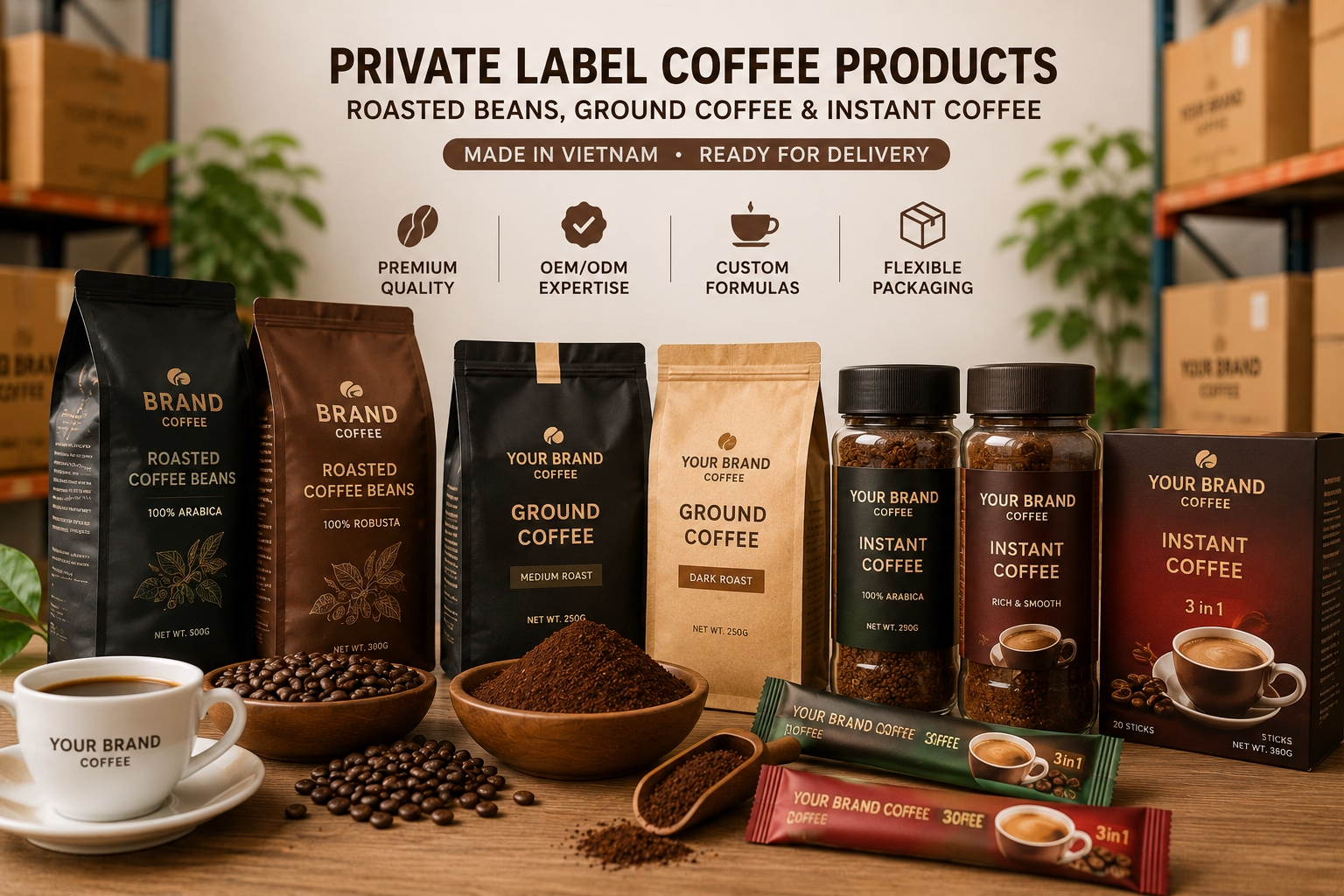
Common products include roasted beans, ground coffee, instant black coffee, 3-in-1 coffee, 4-in-1 coffee, sachet coffee, stick packs and bulk coffee products.
How long does the process take?
The timeline depends on sample revisions, packaging preparation, raw material availability, order quantity and factory scheduling.
What should buyers prepare before contacting a factory?
Buyers should prepare a product brief with product type, target market, flavor direction, packaging format, quantity, target price and required documents.
Conclusion
Contract coffee manufacturing helps B2B buyers launch coffee products without operating their own factory. A strong project starts with a clear product brief, then moves through material selection, formula development, sample testing, packaging, production and quality control.
The best manufacturing partner is not simply the lowest-cost supplier. It is the factory that can understand the target market, develop a practical product, produce consistently and communicate clearly throughout the process.
For buyers building a private label coffee brand, a structured manufacturing process reduces risk and creates a stronger foundation for long-term growth.

No comments yet.